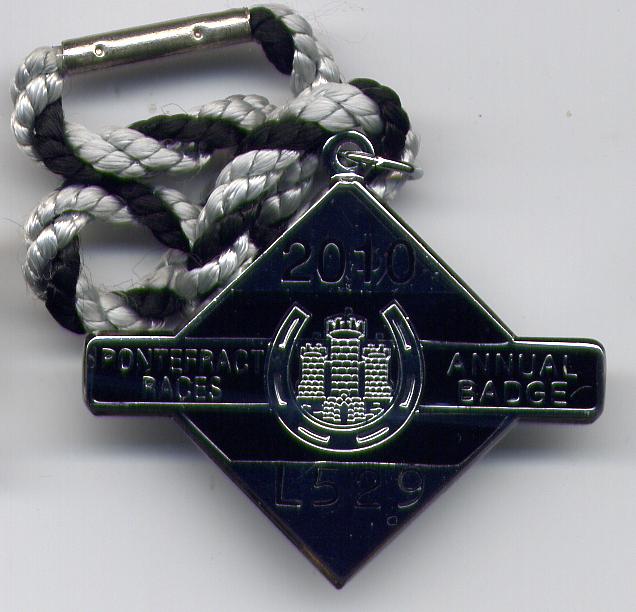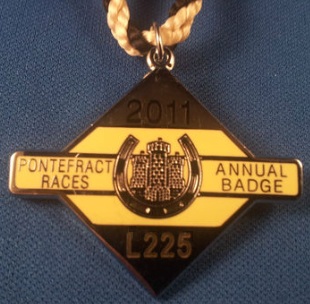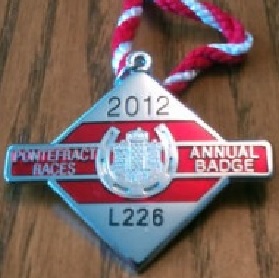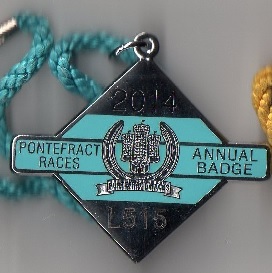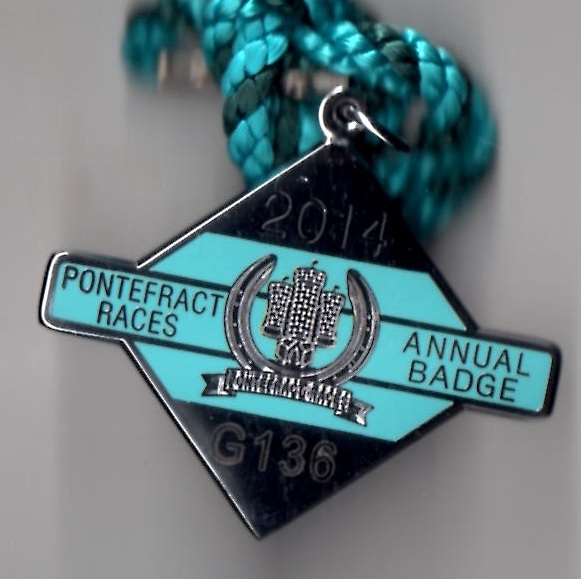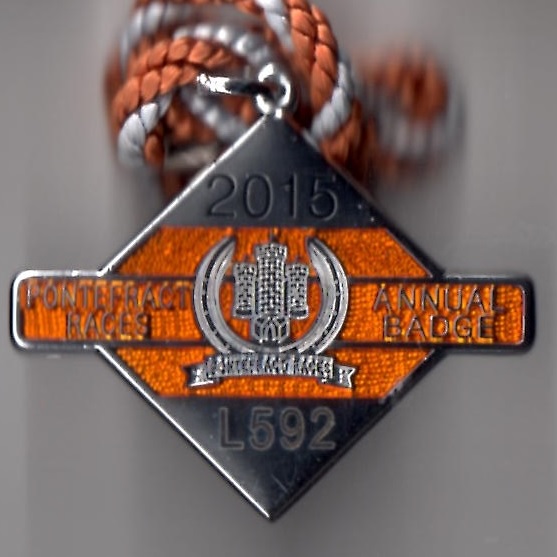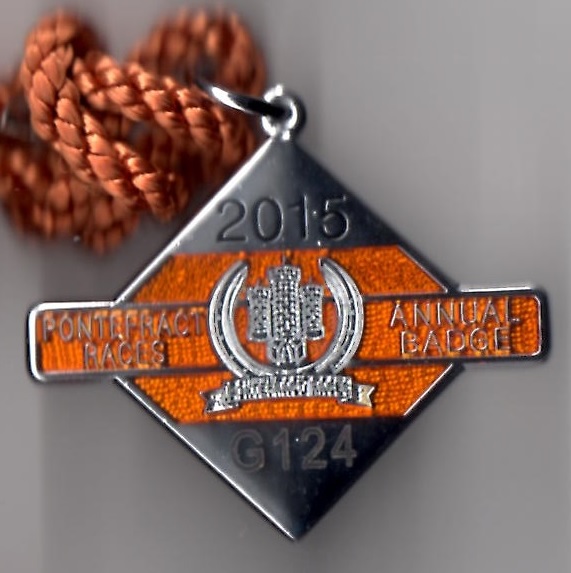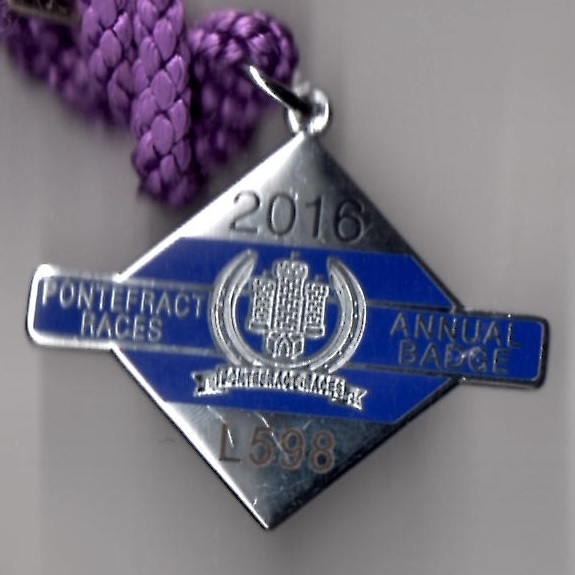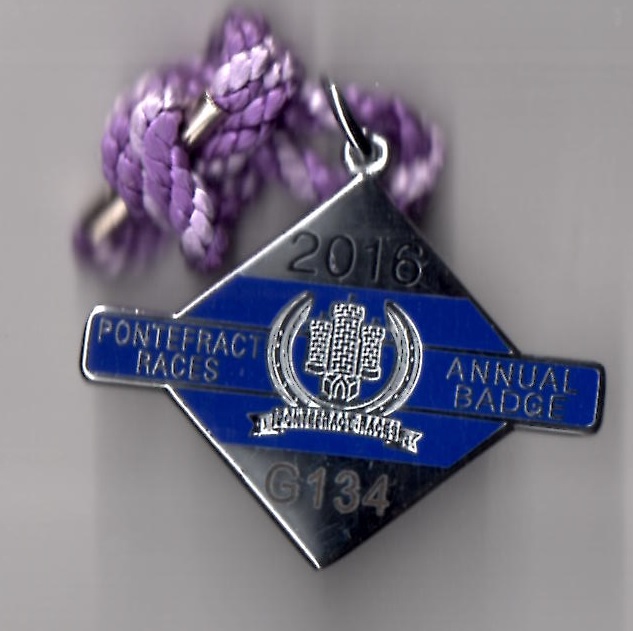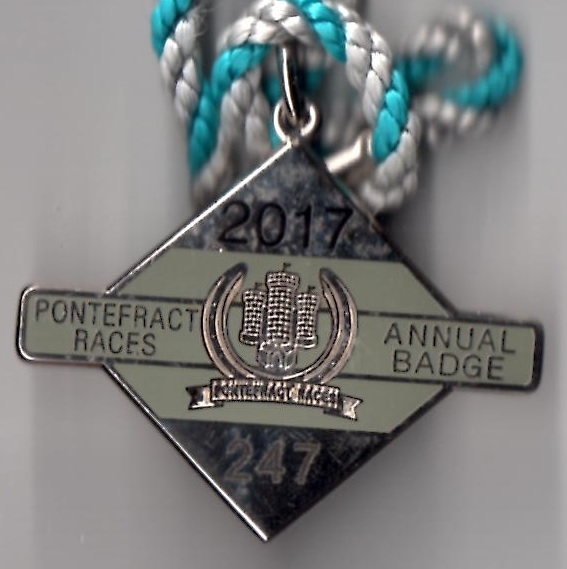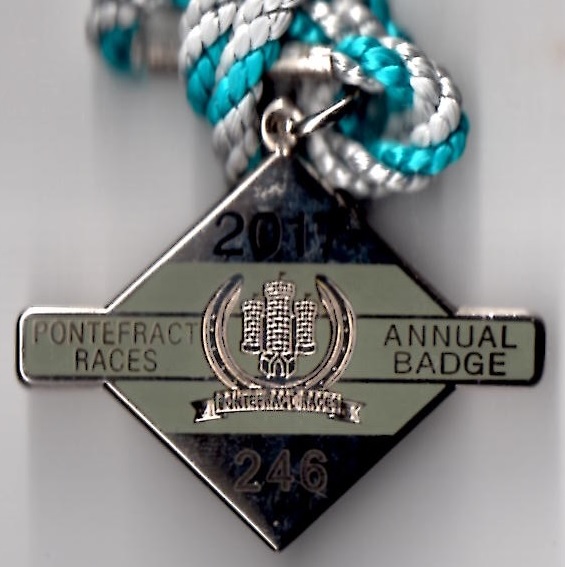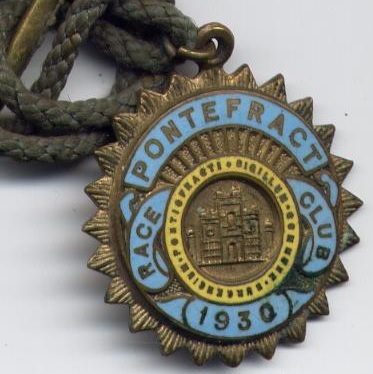
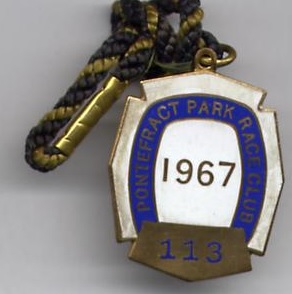
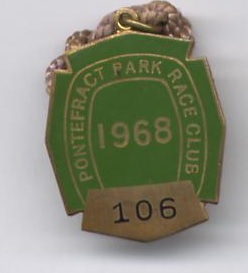
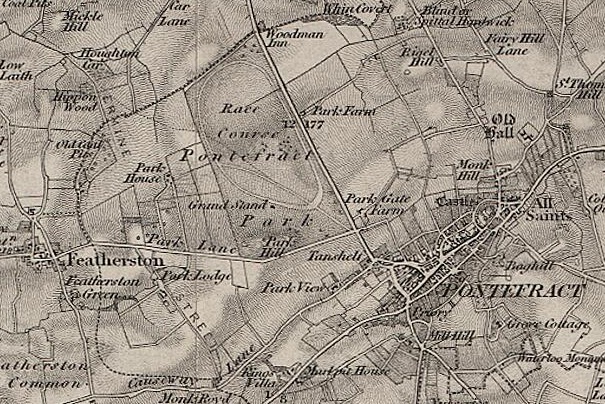
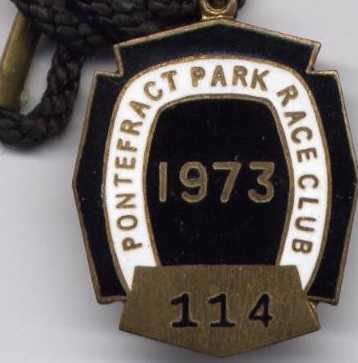
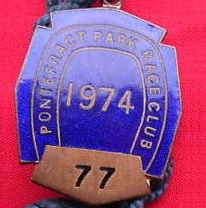
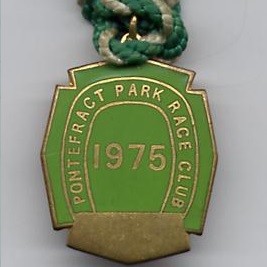
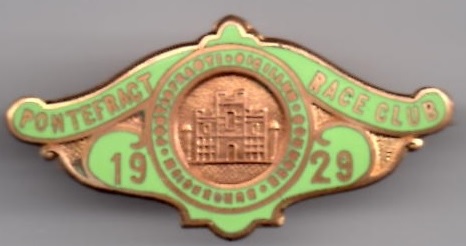
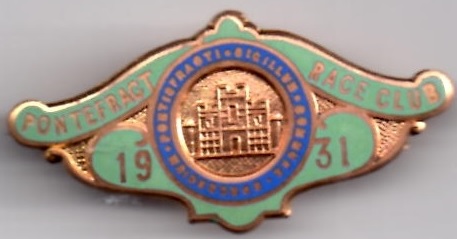
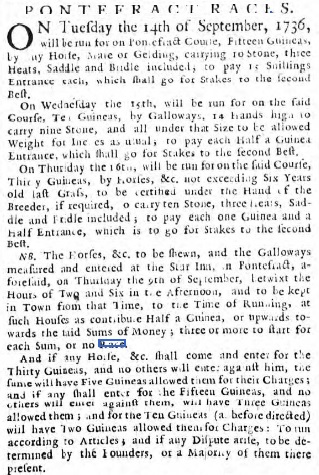
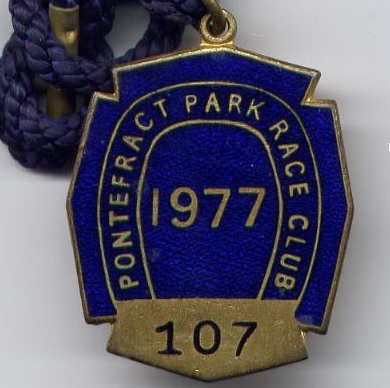
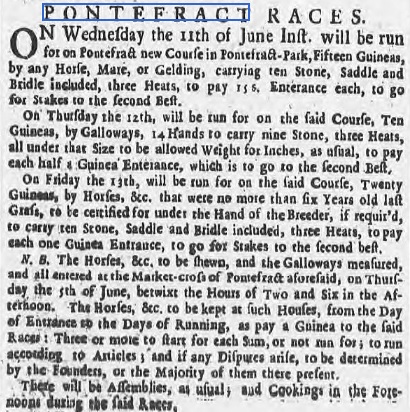
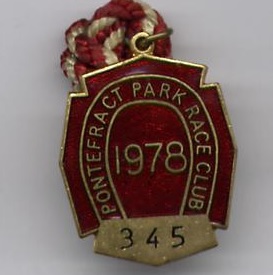
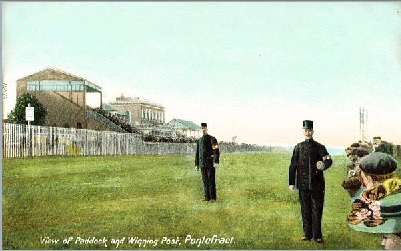
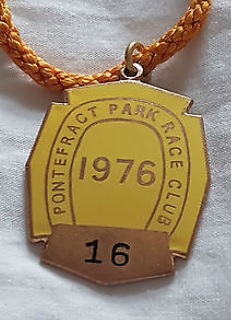
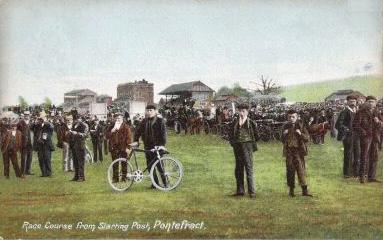
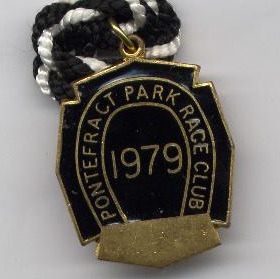
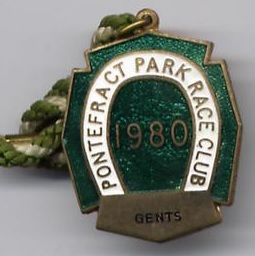
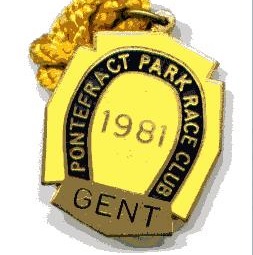
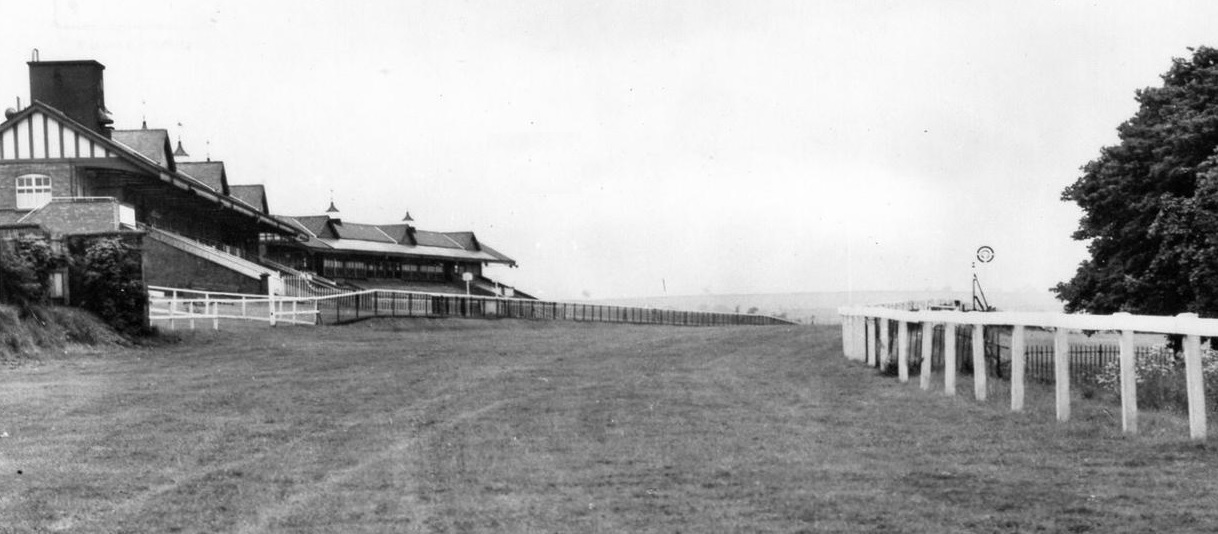
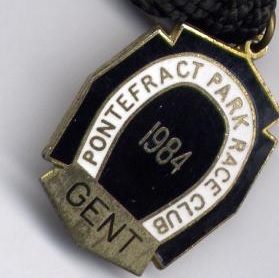
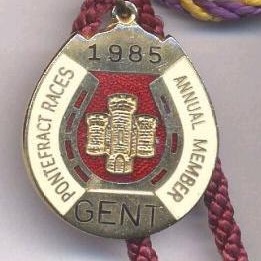
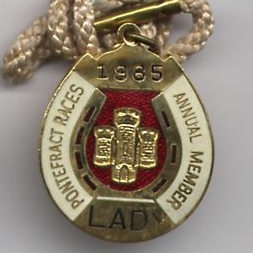
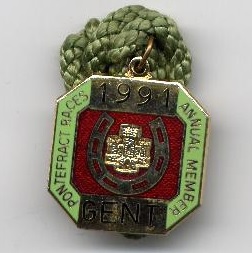
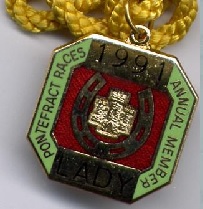
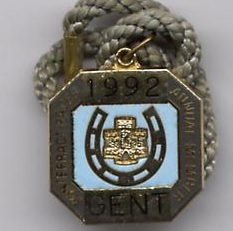
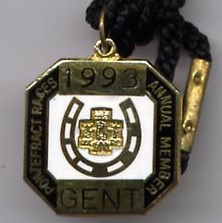
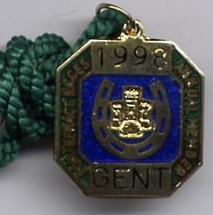
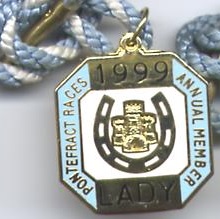
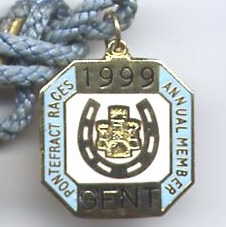
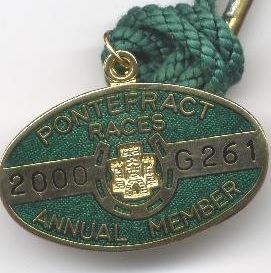
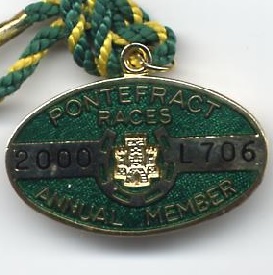
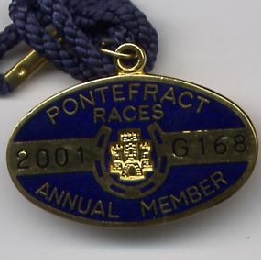
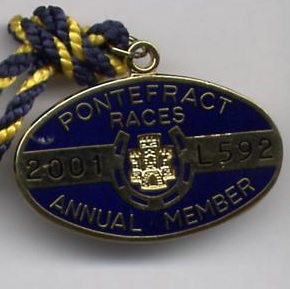
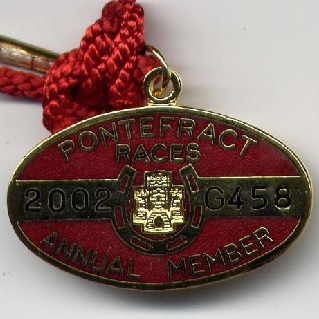
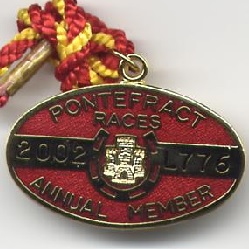
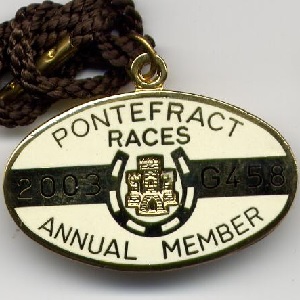
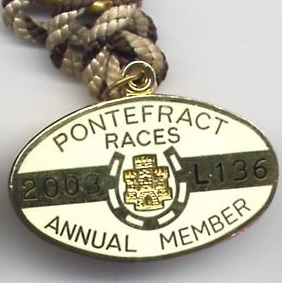
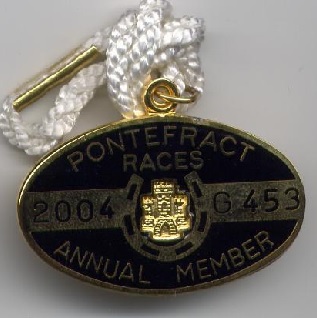
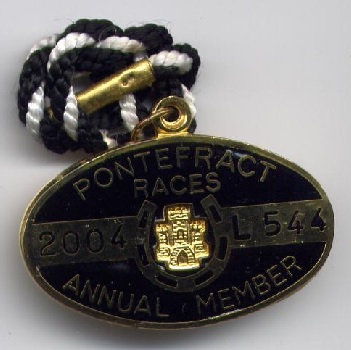
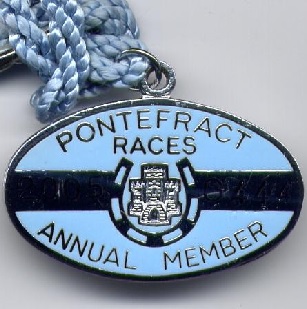
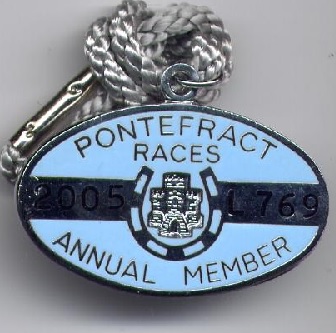
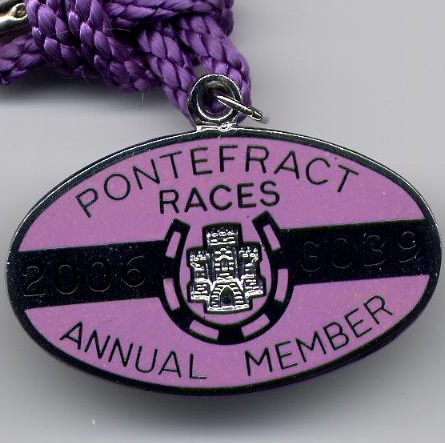
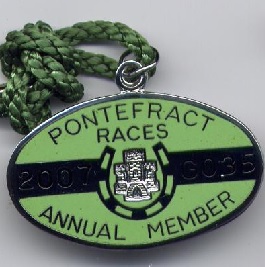
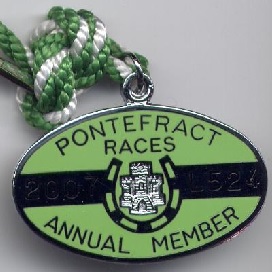
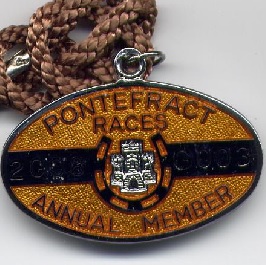
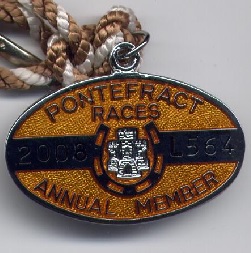
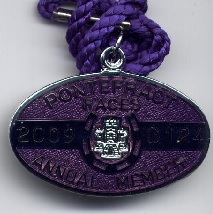
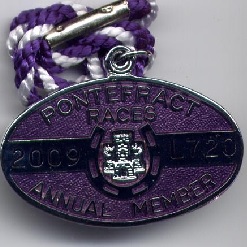
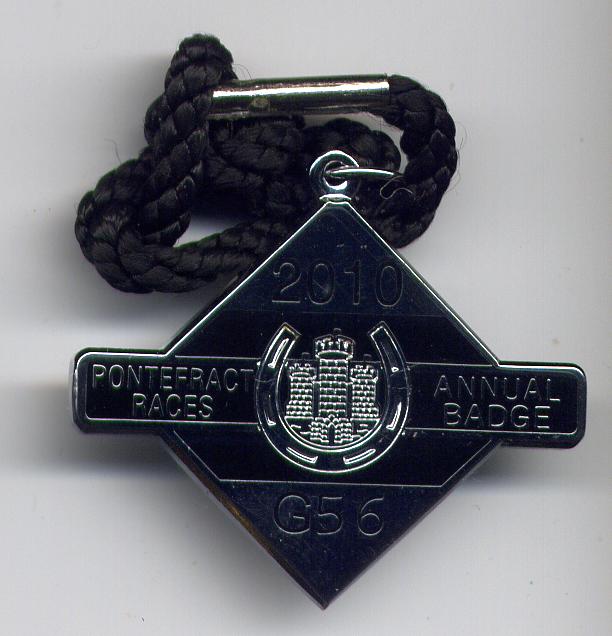
The earliest evidence of racing in the Pontefract area was in March 1648 when races took place near Pontefract Castle. Captain Baines, in charge of Cromwell’s soldiers which had besieged the Castle, questioned whether he should ride his brothers grey mare in one of the races. Meetings were staged regularly over the next century and a half on a variety of courses, including on Pontefract Park, as evidenced by the two newspaper articles shown below. However, it was not until Tuesday 5th October 1790 that a meeting was held in a park close to the present day racecourse. In 1802 Members badges were sold, allowing members entry to the course for the next 20 years. Subscribers to the £50 scheme were issued with a silver ticket and the funds enabled the first grandstand to be built. The Pontefract Cup was launched in 1803 and four of the first five occasions it was contested were won by Lord Darlington, the result of the inaugural running is shown below. There was disquiet in 1831 when Pontefract races were reported to be in decline by the Sporting Magazine and in danger of ceasing. This news was not taken well by all of the ‘members’ who had subscribed £50 and they threatened to dismantle the grandstand. In 1906 the Corporation leased the racecourse ground to a management group led by the Mayor, the Alderman and the Burgesses. Racing ceased during the war years, but in 1916 the Pontefract Race Company was formed under the chairmanship of Major General Sir Loftus Bates. During the Second World War Pontefract was one of only two Northern courses allowed to hold racing, the other being Stockton. This enabled the substitute Ebor to be transferred from York in 1943 when Yorkshire Hussar was successful. On Wednesday 6th April 1983 the course was transformed when the previous horseshoe shaped course became an oval, enabling races of up to two miles to be contested, making it the longest continuous flat racing circuit in Britain. One of its principal races is the Listed Silver Tankard Stakes for 2 year olds over a mile which was first contested in 1993 when won by Barbaroja, trained by Jimmy Fitgerald and ridden by Walter Swinburn. Full results from that race are shown below. Currently the course offers 16 fixtures annually.
Wednesday 14th September 1803
Pontefract 100 Guineas Gold Cup
1. Agonistes, bay horse carrying 8st 12 lbs owned by Lord Darlington
2. Unnamed bay colt by Ormond carrying 6st 2 lbs owned by Mr Mellish
3. Strap, bay colt carrying 6st 2 lbs owned by Mr Lee
4. Dick, 3 year old colt carrying 6st 2 lbs owned by Mr Wilson
Betting 6/4 Agonistes
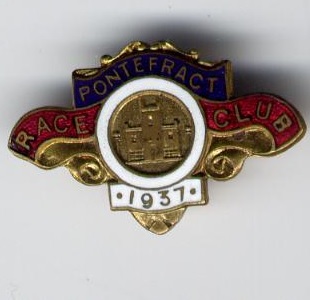
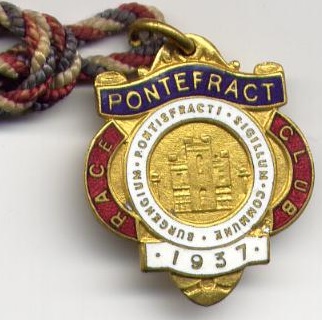
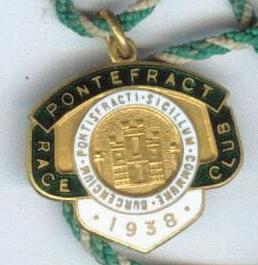
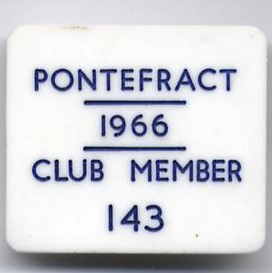
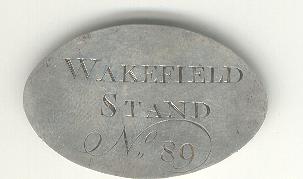
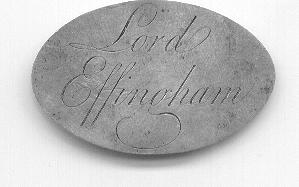
The first evidence of racing at Wakefeld was in 1678 on the third Wednesday in August. It took place on The Ings near to Law Hill. However, once gentlemen landowners laid claim to The Ings the racecourse was relocated to Outwood, a course of about 2 miles round. It became established and a grandstand was built from subscriptions from supporters who were given life membership badges, although racing only lasted until 1794. There was a lull until 1847 when the Wakefield Grand National was launched by the Earl of Strathmore. It was run over a 4 mile course consisting of 53 fences, starting at Sandal Castle, but lasted for just 2 more years, with the final meeting on Wednesday 21st February 1849.
Monday 27th December 1847
Wakefield Grand National over 4 miles and 53 fences
1. Proceed, 11 st 4 lbs owned by Mr Maddock
2. Sailor, 10 st 2 lbs owned by Mr S Mason jnr.
3. Langley Lass, 10 st 2 lbs owned by Mr Surtees
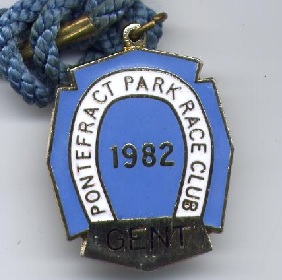
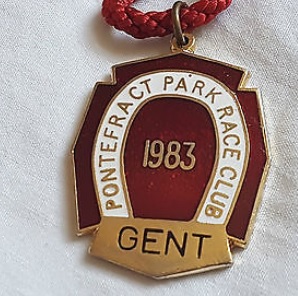
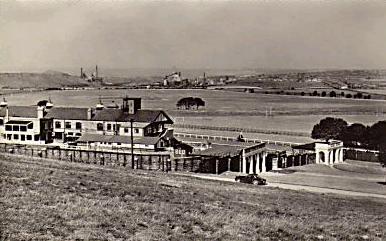
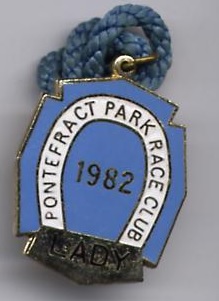
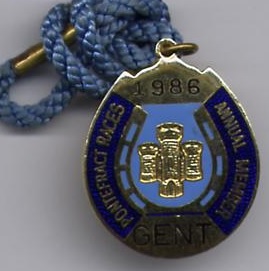
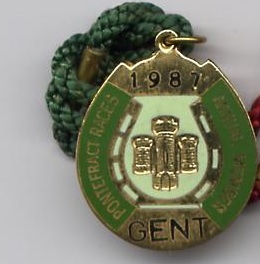
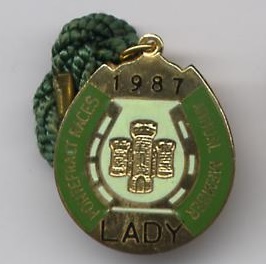
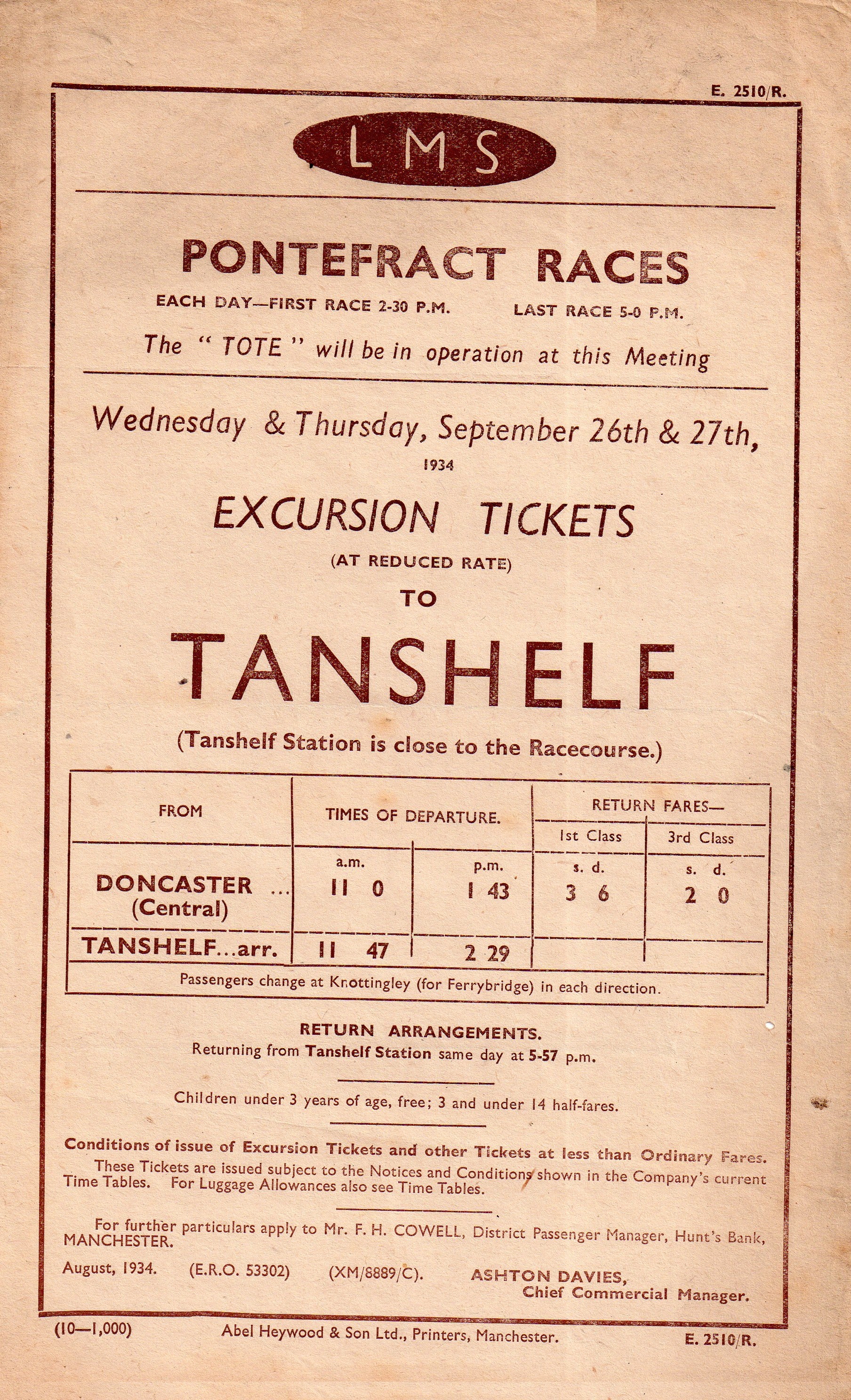
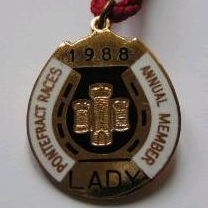
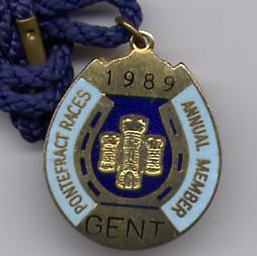
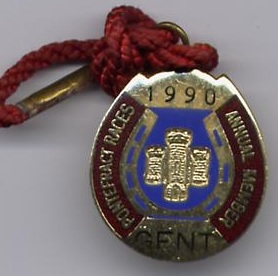
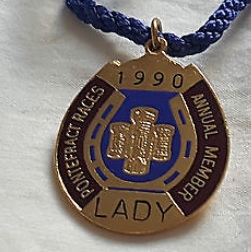
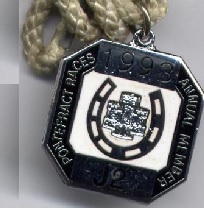
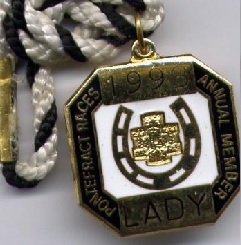
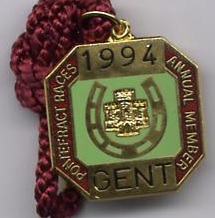
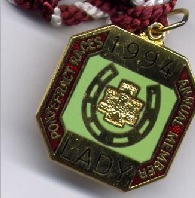
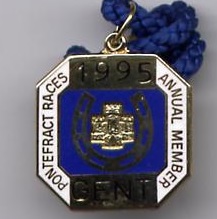
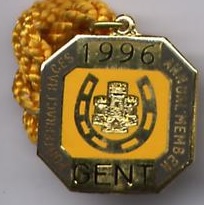
The Silver Tankard Stakes is a 2 year old Listed race run over a mile each October. The inaugural running was in 1993 when the Jimmy Fitzgerald trained Barbaroja was successful. Full results are shown below.
1993 The Silver Tankard Stakes was won by Barbaroja (3/1), trained by Jimmy Fitzgerald and ridden by Walter Swinburn 8 ran
1994 The Silver Tankard Stakes was won by Kalabo (5/2 jf), trained by Henry Cecil and ridden by Willie Ryan 7 ran
1995 The Silver Tankard Stakes was won by Weet-a-Minute (4/1), trained by Reg Hollinshead and ridden by Kieren Fallon 6 ran
1996 The Silver Tankard Stakes was won by Entice (5/2 jf), trained by Barry Hills and ridden by Michael Hills 7 ran
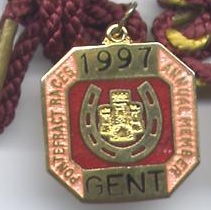
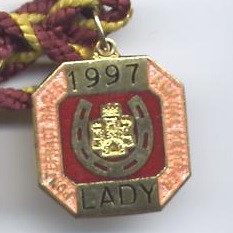
1997 The Silver Tankard Stakes was won by Gulland (10/11 fav), trained by Geoff Wragg and ridden by Michael Hills 8 ran
1998 The Silver Tankard Stakes was won by Three Green Leaves (3/1 jf), trained by Mark Johnston and ridden by Joe Fanning 7 ran
1999 The Silver Tankard Stakes was won by Hataab (3/1), trained by Ed Dunlop and ridden by Richard Hills 6 ran
2000 The Silver Tankard Stakes was won by Worthily (11/4 fav), trained by Mick Channon and ridden by John Reid 9 ran
2001 The Silver Tankard Stakes was won by Bandari (7/2 fav), trained by Mark Johnston and ridden by Kevin Darley 12 ran
2002 The Silver Tankard Stakes was won by Battle Chant (7/2), trained by Ed Dunlop and ridden by Seb Sanders 5 ran
2003 The Silver Tankard Stakes was won by New Mexican (2/1 fav), trained by Lynda Ramsden and ridden by Jamie Spencer 10 ran
2004 The Silver Tankard Stakes was won by Comic Strip (4/5 fav), trained by Sir Mark Prescott and ridden by Seb Sanders 9 ran
2005 The Silver Tankard Stakes was won by Nakheel (11/8 fav), trained by Mark Johnston and ridden by Richard Hills 7 ran
2006 The Silver Tankard Stakes was won by Sweet Lilly (4/1), trained by Mick Channon and ridden by Tony Culhane 8 ran
2007 The Silver Tankard Stakes was won by Siberian Tiger (12/1), trained by Mick Channon and ridden by Tadhg O’Shea 6 ran
2008 The Silver Tankard Stakes was won by Playfellow (4/9 fav), trained by Michael Jarvis and ridden by Phillip Robinson 4 ran
2009 The Silver Tankard Stakes was won by Gallic Star (11/2), trained by Mick Channon and ridden by Chris Catlin 8 ran
2010 The Silver Tankard Stakes was won by Zinella (10/1), trained by Ann Duffield and ridden by Paul Hanagan 6 ran
2011 The Silver Tankard Stakes was won by Letsgoroundagain (15/2), trained by Charlie Hills and ridden by William Carson jnr 8 ran
2012 The Silver Tankard Stakes was won by Willie the Whipper (7/1), trained by Ann Duffield and ridden by Graham Lee 7 ran
2013 The Silver Tankard Stakes was won by Lady Heidi (20/1), trained by Philip Kirby and ridden by Silvestre de Sousa 5 ran
2014 The Silver Tankard Stakes was won by Prince Gargarin (4/1 cf), trained by Ed Dunlop and ridden by Adam Kirby 8 ran
2015 The Silver Tankard Stakes was won by Thanksfortellingme (13/8 fav), trained by Ralph Beckett and ridden by Richard Kingscote 7 ran
2016 The Silver Tankard Stakes was won by D’bai (9/4 fav), trained by Charlie Appleby and ridden by William Buick 8 ran