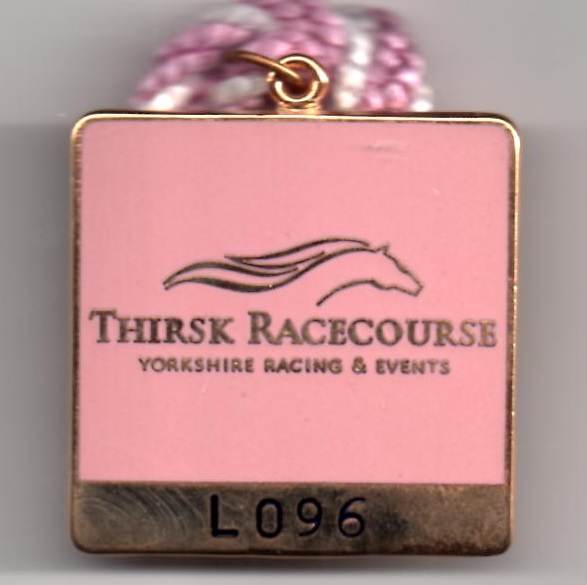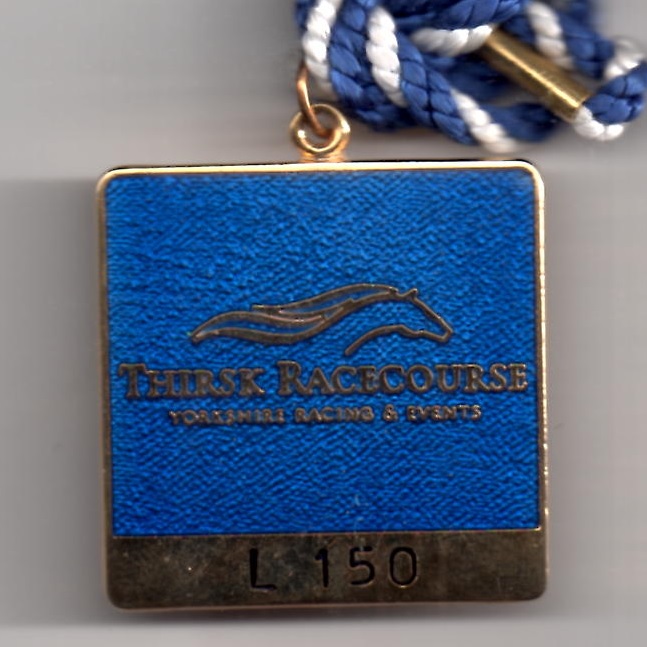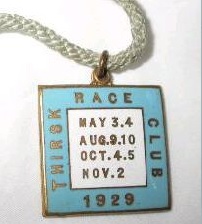
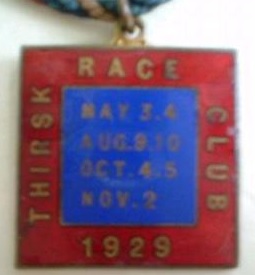
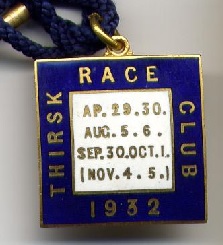
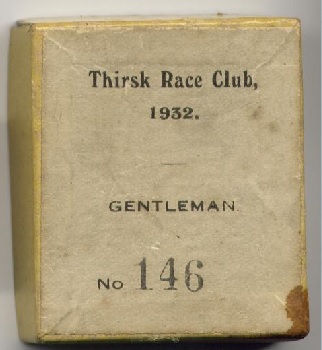
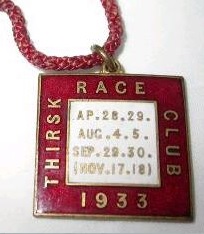
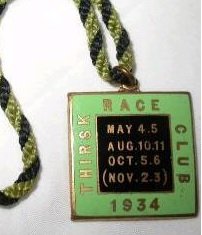
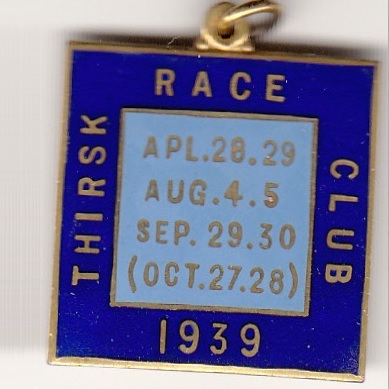
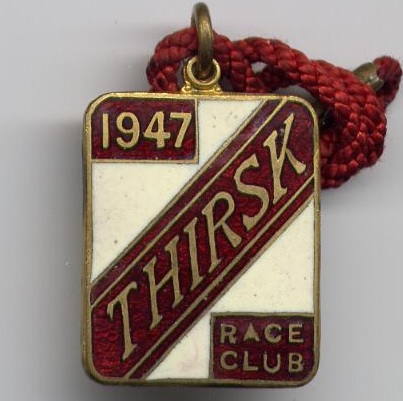
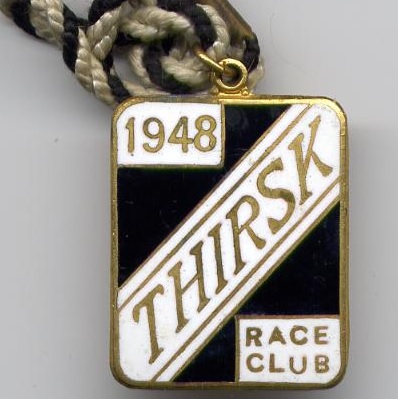
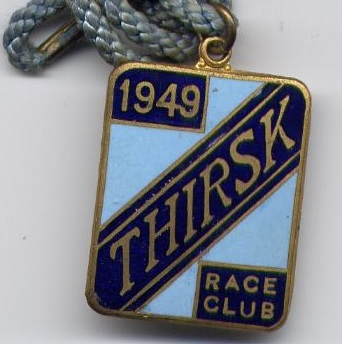
One of the oldest courses in the country was at Hambleton, just 8 miles from Thirsk, which held meetings as early as 1612. However, in the middle of the 19th century a famous committee meeting took place in 1854 at the Golden Fleece Hotel in Thirsk when Frederick Bell offered his Thirsk Hall estate as a venue for race meetings. The offer was accepted and the inaugural meeting on the new course took place on Thursday 15th March 1855. Just four years later the Thirsk Hunt Cup, valued at £30, was won by Egg Sauce owned by Sir C Slingsby, increasing in value to 100 guineas in 1862 when Lady Bird was triumphant, but decreasing to £50 in 1868 when won by Scarrington. The Prince of Wales, later King Edward, visited Thirsk in 1895 and a large crowd, not seen since the days when Fred Archer rode at Thirsk, attended the meeting. The Royal Stand, nicknamed The Royal Pavillion, was built in the centre of the course for his use on 17th and 18th October 1895. The course closed from 1914 to 1923 because of the First World War, during which the old grandstand, known as The Royal Pavilion, was demolished, but the course reopened on Friday 8th August 1924 with Sir Loftus Bates at the helm. The year 1940 was a pivotal year for Thirsk, hosting the St Leger for the one and only time, after it was transferred from Doncaster due to the War. It proved to be a triumph for Sir Gordon Richards on Turkham owned by H.H.Aga Khan. Shortly afterwards racing ceased until 1946. In 1975 John Sanderson took over as Clerk of the Course, one of a number of Yorkshire courses he oversaw and developed. Currently the course hosts 17 fixtures annually.
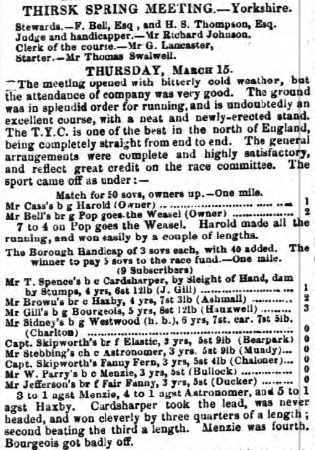
Thursday 15th March 1855
The Borough Handicap over a mile
1. Cardsharper, bay colt owned by Mr T Spence
2. Haxby, brown colt owned by Mr Brown
3. Bourgeois, bay gelding owned by Mr Gill
Racing at Hambleton was recorded as early as July 1612, which suggests that it was in place even before Newmarket. A key success indicator for any meeting in those early days was to get royal approval. Newmarket got its through James I and Hambleton was supported by Queen Anne until her death in 1714. The Queen Anne Cup was for horses, mares or geldings up to 5 years old to race over a 4 mile circuit and carry 10 stone. Often, in the early days, the meeting was referred to as 'Black Hambleton' although that area was far too hilly and the meeting itself was staged a short distance south. The Jockey Club wished to limit the number of meetings nationwide which working folk could attend. Their method of reduction was to prohibit meetings where the prize money was less than £50 per race. However, three exceptions were given to ensure that racing continued to take place in the important areas; Newmarket and York were two of the exceptions, whilst the third was Black Hambleton. On Saturday 8th August 1779 new ground was broken at Hambleton when the first race for 2 year olds in the north was held. Up to then horses had to be aged 3 before they could race, and not long before this date horses had to reach the age of 4 before commencing racing. It is not surprising that the meeting at Hambleton finally died out; indeed the surprise is that it lasted so long, given its location and the difficulties of getting to the meeting for horses, owners and punters. The final meeting took place on Saturday 27th July 1811 and all evidence of the existence of such an important race meeting has now vanished forever.
Saturday 8th August 1719
His Majesty’s Gold Cup value 100 Guineas over 4 miles
1. Bonny Black owned by The Duke of Rutland
2. Unnamed mare owned by Mr Watson
3. Unnamed mare owned by Sir R Milbank
There were a further 28 runners in what was a very competitive race.
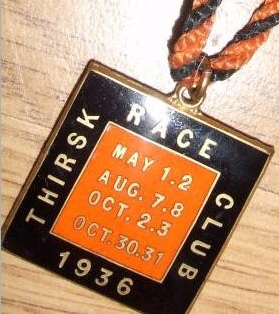
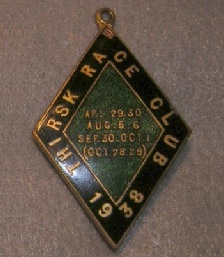
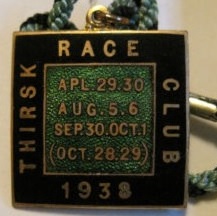
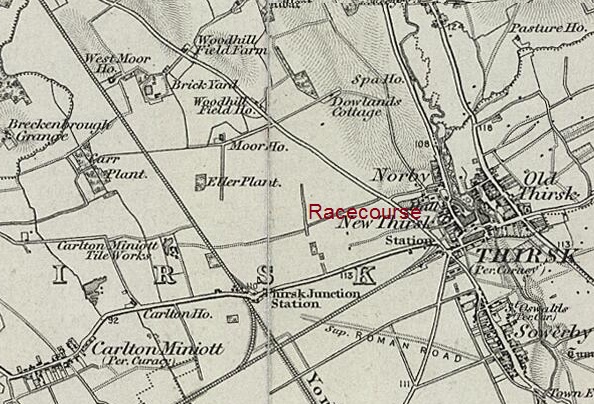
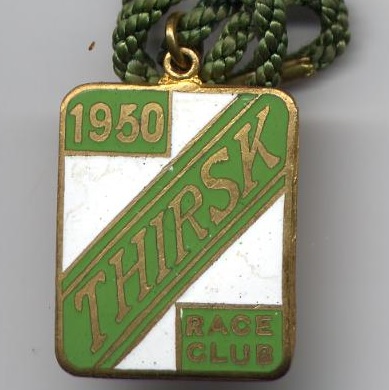
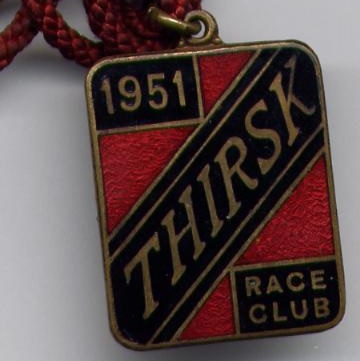
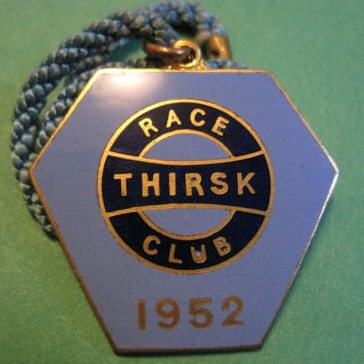
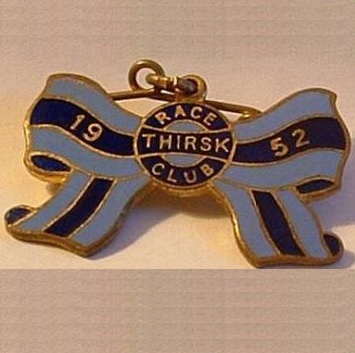
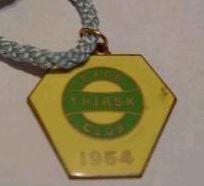
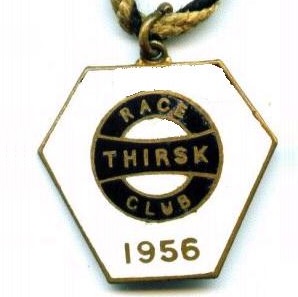
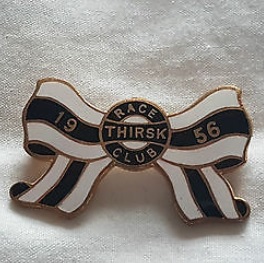
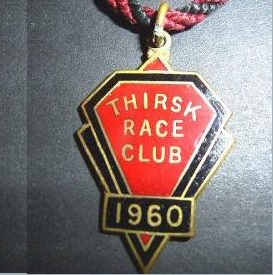
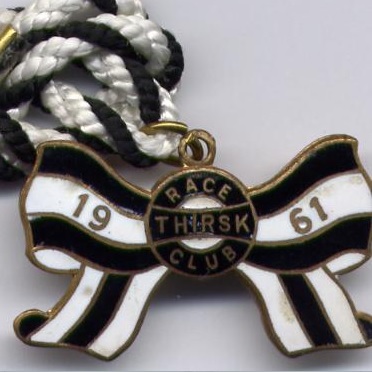
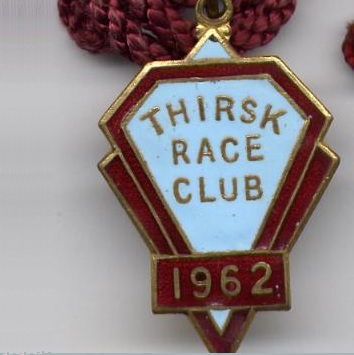
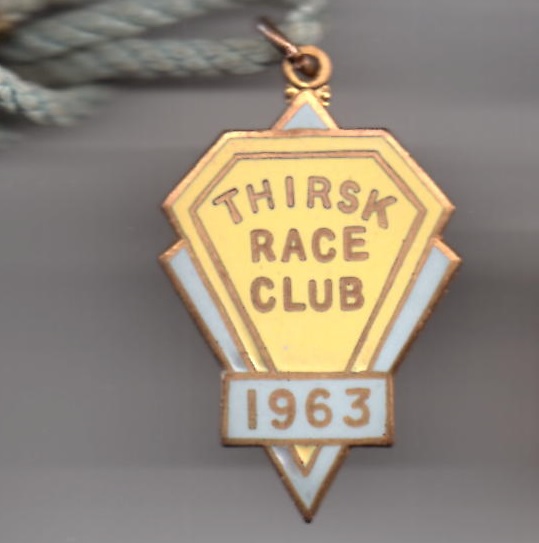
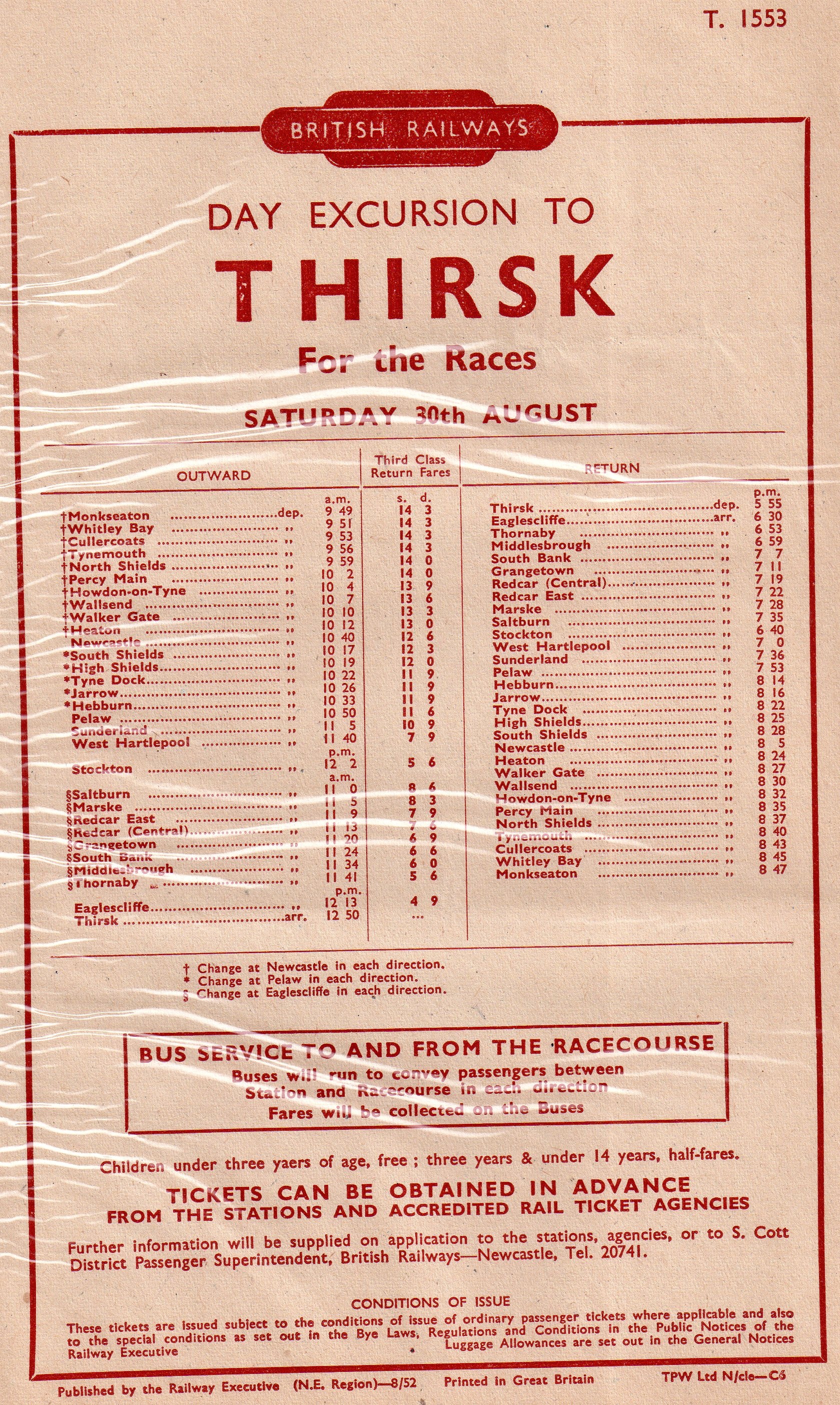
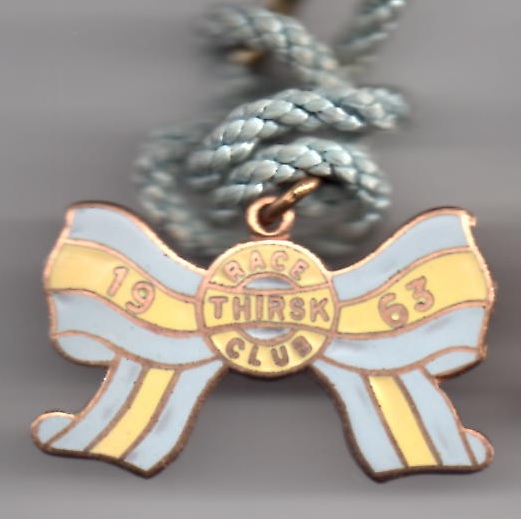
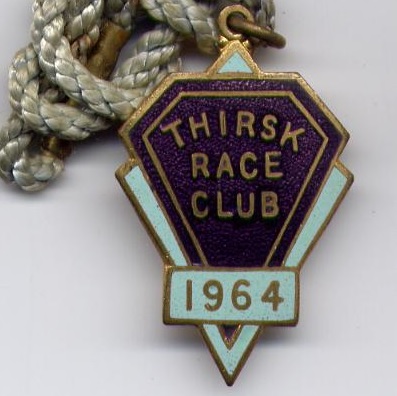
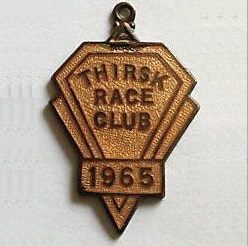
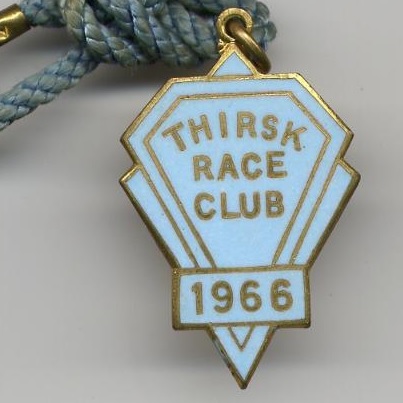
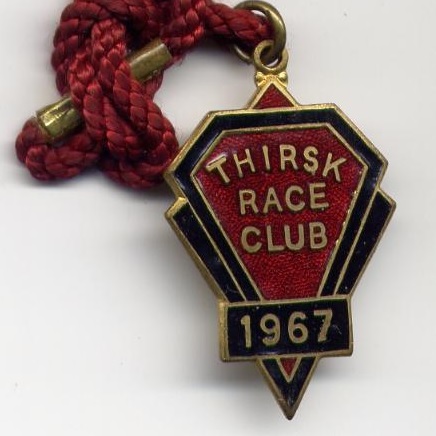
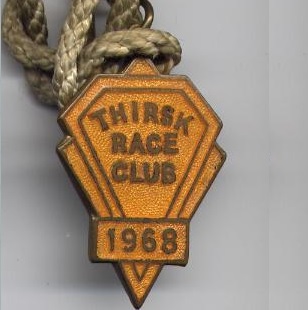
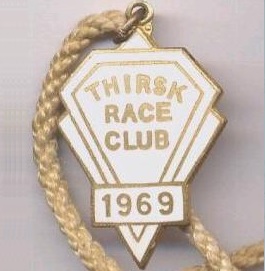
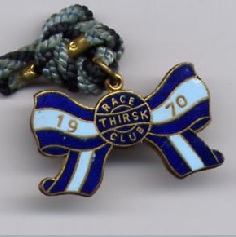
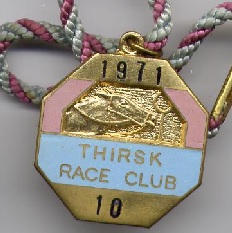
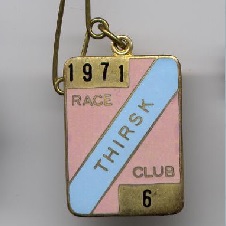
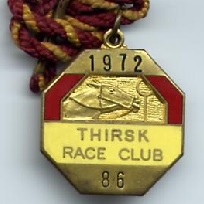
Today the Thirsk Hunt Cup is a Class 2 Handicap run over 1 mile, but when it was first contested in 1859 it was confined to half-bred horses that had been regularly hunted with any established pack of foxhounds. It was run over 2 ½ miles and reserved for gentlemen riders. The inaugural event was won by the Egg Sauce, owned and ridden by Sir Charles Slingsby, the 10th Baronet of Scriven. Results of subsequent Hunt Cups are shown below.
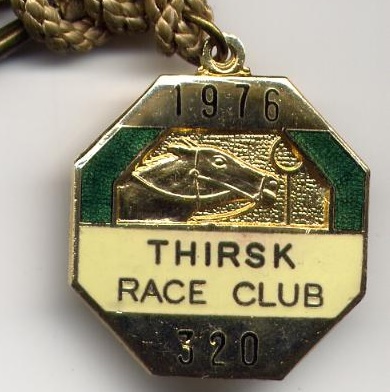
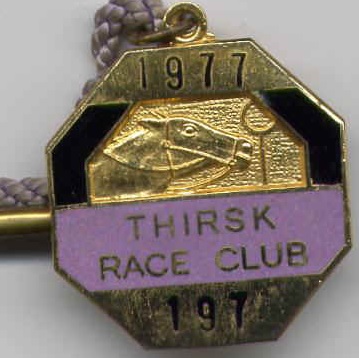
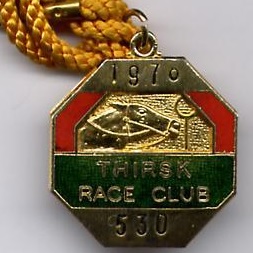
1859 The Thirsk Hunt Cup was won by Egg Sauce, owned and ridden by Sir Charles Slingsby 9 ran
1860 The Thirsk Hunt Cup was won by Roscrea (7/1), owned by Mr W E Duncombe and ridden by Captain Riddell 24 ran
1861 The Thirsk Hunt Cup was won by Tom Ball (10/1), owned by Lord Middleton and ridden by Mr Wood 17 ran
1862 The Thirsk Hunt Cup was won by Lady Bird (5/4 fav), owned by Sir G Strickland and ridden by Mr G S Thompson 21 ran
1863 The Thirsk Hunt Cup was won by Wali Ali Wajid (5/2), owned by Mr T Hall and ridden by Mr G S Thompson 8 ran
1864 The Thirsk Hunt Cup was won by Adonis (10/1, owned by Sir G Strickland and ridden by Mr C Boynton 14 ran
1865 The Thirsk Hunt Cup was won by Vandal (4/7 fav), owned by Lord Middleton and ridden by Mr C Boynton 11 ran
1866 The Thirsk Hunt Cup was won by Marksman (4/6 fav), owned by Mr R Calder and ridden by Mr C S Boynton 13 ran
1867 The Thirsk Hunt Cup was won by an Unnamed colt by Lord Fauconberg (7/4 fav), owned by Mr Leighton and ridden by Mr C Boynton 9 ran
1868 The Thirsk Hunt Cup was won by Scarrington (11/8 fav), owned by Mr T Wilkinson and ridden by Mr T Spence 5 ran
1869 The Thirsk Hunt Cup was won by Scarrington (6/4), owned by Mr T Wilkinson and ridden by Mr T Spence 5 ran
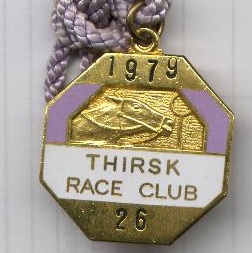
1870 The Thirsk Hunt Cup was won by Lawsuit (2/1 fav), owned by Lord Feversham and ridden by Mr G S Thompson 7 ran
1871 The Thirsk Hunt Cup was won by Defence (2/1 fav), owned by Mr R Danby and ridden by Mr Elrington 8 ran
1872 The Thirsk Hunt Cup was won by Redbreast (6/4), owned by Mr G Simpson and ridden by Mr W Simpson 2 ran
1873 The Thirsk Hunt Cup was won by Duc de Beaufort (7/2 jf), owned by Mr H F C Vyner and ridden by Mr G S Thompson 16 ran
1874 The Thirsk Hunt Cup was won by Master Cap (4/1), owned by Captain Fryer and ridden by Mr Brooks 9 ran
1875 The Thirsk Hunt Cup was won by Whalebone (4/5 fav), owned by Mr J M Richardson and ridden by Mr Rolly 9 ran
1876 The Thirsk Hunt Cup was won by Fred Aislable (7/1), owned by Mr Vyner and ridden by Mr G S Thompson 9 ran
1877 The Thirsk Hunt Cup was won by Zaandam (Evens fav), owned by Mr C Clark and ridden by Mr R Walker 6 ran
1878 The Thirsk Hunt Cup was won by Pilchard (3/1 jf), owned by Mr R Jardine and ridden by Mr G S Thompson 9 ran
1879 The Thirsk Hunt Cup was won by Restoration (Evens fav), owned by Mr Cheshire and ridden by Mr T Spence 4 ran
1880 The Thirsk Hunt Cup was won by Ewbank (2/1 fav), owned by Mr W Johnson and ridden by Mr G S Thompson 9 ran
1881 The Thirsk Hunt Cup was won by Gay Lad (4/5 fav), owned by Mr T Acklam and ridden by Mr Acklam Jnr 3 ran
1882 The Thirsk Hunt Cup was won by Prince Paul (Evens fav), owned by Mr Cookson and ridden by Mr T Spence 7 ran
By 1883 the race had changed in nature from a 2 ½ mile race for half-bred horses and gentlemen riders to a 2 mile Flat race.
1883 The Thirsk Hunt Cup was won by an unnamed bay mare by Anglo Saxon (Evens fav), owned and ridden by Mr A Shrimpton 2 ran
1884 The Thirsk Hunt Cup was won by Canute (3/1), owned by Lord Yarborough and ridden by Mr H Brooks 5 ran
1885 The Thirsk Hunt Cup was won by Oakleaf (1/2 fav), owned by Mr M D Peacock and ridden by Mr Peacock 4 ran
1886 The Thirsk Hunt Cup was won by Corinthian Kate (5/1), owned and ridden by Mr C C Dornier 7 ran
1887 The Thirsk Hunt Cup was won by Outlaw (7/1), owned and ridden by Major Meysey Thompson 5 ran
1888 The Thirsk Hunt Cup was won by Saunby (2/7 fav), owned and ridden by Mr R Walker 3 ran
1889 The Thirsk Hunt Cup was won by Mosquito (6/4 fav), owned by Mr A Christie and ridden by Mr Raimes 4 ran
In 1890 a new management group took over at the course, hoping to ‘regain the old prestige and patronage’. With such small fields of 5, 3 and 4 in the past 3 years the group decided to drop the Hunt Cup from its programme. The race returned to the calendar in the 20th century as the principal one mile race at the track.
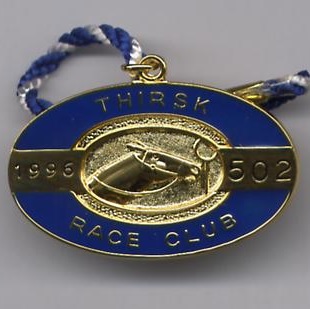
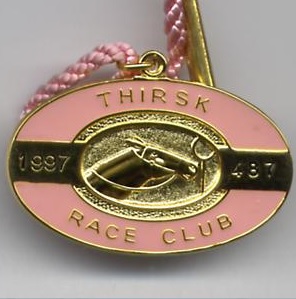
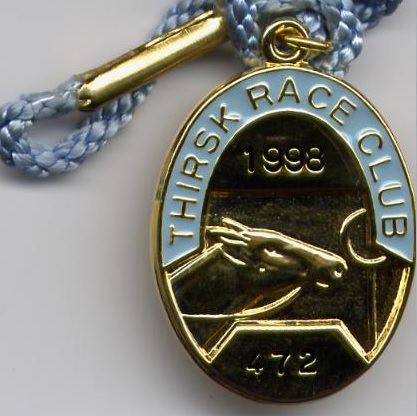
1956 The Thirsk Hunt Cup was won by Sonorous (6/1), trained by Cottrill and ridden by Doug Smith 15 ran
1957 The Thirsk Hunt Cup was won by King’s Coup (7/2), trained by Easterby and ridden by D Greening 6 ran
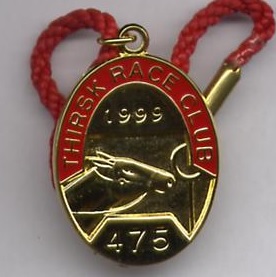
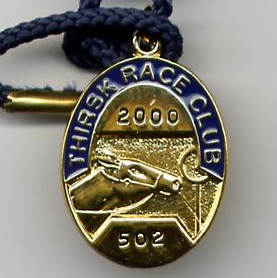
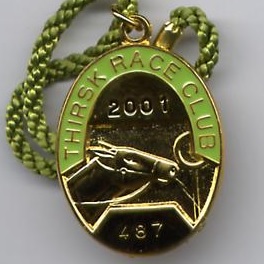
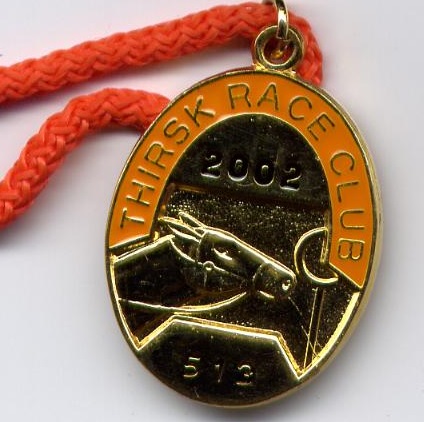
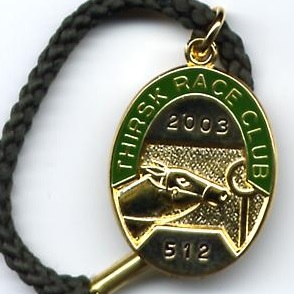
1997 The Thirsk Hunt Cup was won by Gadge (4/1), trained by A Bailey and ridden by D Wright 17 ran
1998 The Thirsk Hunt Cup was won by High Spirits I (6/1), trained by Tim Easterby and ridden by Dean Mernagh 18 ran
1999 The Thirsk Hunt Cup was won by Latalomme (12/1), trained by B Ellison and ridden by John McAuley 17 ran
2000 The Thirsk Hunt Cup was won by Volontiers (15/2), trained by P Harris and ridden by A Beech 18 ran
2001 The Thirsk Hunt Cup was won by Court Express (20/1), trained by A Swinbank and ridden by Jason Weaver 18 ran
2002 The Thirsk Hunt Cup was won by Tedstale (9/2), trained by Tim Easterby and ridden by Robert Winston 18 ran
2003 The Thirsk Hunt Cup was won by Hallion (16/1), trained by J Given and ridden by W Ryan 17 ran
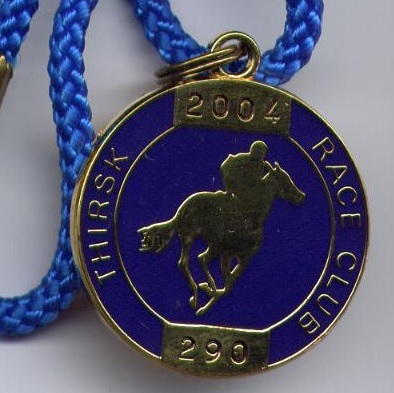
2004 The Thirsk Hunt Cup was won by Blue Spinnaker (11/1), trained by Mick Easterby and ridden by Paul Mulrennan 17 ran
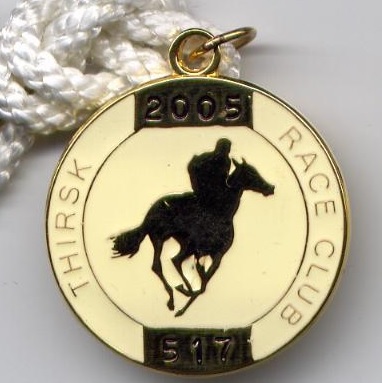
2005 The Thirsk Hunt Cup was won by Ballast (8/1), trained by Luca Cumani and ridden by Nicky Mackay 14 ran
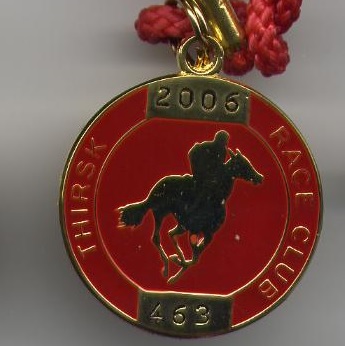
2006 The Thirsk Hunt Cup was won by Minority Report (2/1), trained by Luca Cumani and ridden by Nicky Mackay 13 ran
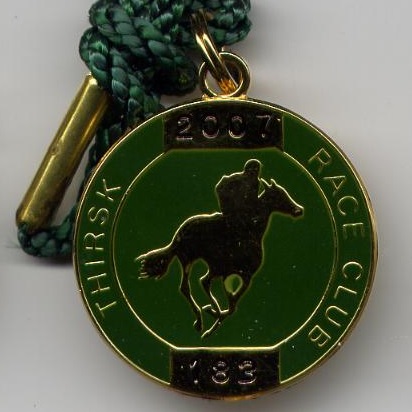
2007 The Thirsk Hunt Cup was won by My Paris (13/2), trained by Kevin Ryan and ridden by D O’Donohue 15 ran
2008 The Thirsk Hunt Cup was won by Extraterrestrial (4/1), trained by Richard Fahey and ridden by Paul Hanagan 14 ran
2009 The Thirsk Hunt Cup was won by Flawed Genius (8/1), trained by Kevin Ryan and ridden by Neil Callan 16 ran
2010 The Thirsk Hunt Cup was won by Osteopathic Remedy (8/1), trained by Michael Dods and ridden by P J McDonald 15 ran
2011 The Thirsk Hunt Cup was won by Justonefortheroad (4/1), trained by Richard Fahey and ridden by Lee Topliss 15 ran
2012 The Thirsk Hunt Cup was won by Farhh (5/4 fav), trained by Saeed Bin Suroor and ridden by Antioco Murgia 16 ran
2013 The Thirsk Hunt Cup was won by Norse Blues (7/2), trained by David Barron and ridden by Graham Gibbons 15 ran
2014 The Thirsk Hunt Cup was won by Fort Bastion (9/1), trained by Mrs R A Carr and ridden by James P Sullivan 14 ran
2015 The Thirsk Hunt Cup was won by Sound Advice (13/2), trained by Keith Dalgleish and ridden by Phillip Makin 18 ran
2016 The Thirsk Hunt Cup was won by Finn Class (16/1), trained by Michael Dods and ridden by Tom Eaves 15 ran
2017 The Thirsk Hunt Cup was won by Cote D’Azur (8/1), trained by J L Eyre and ridden by P J McDonald 17 ran